Mines Rumble — Landslide.
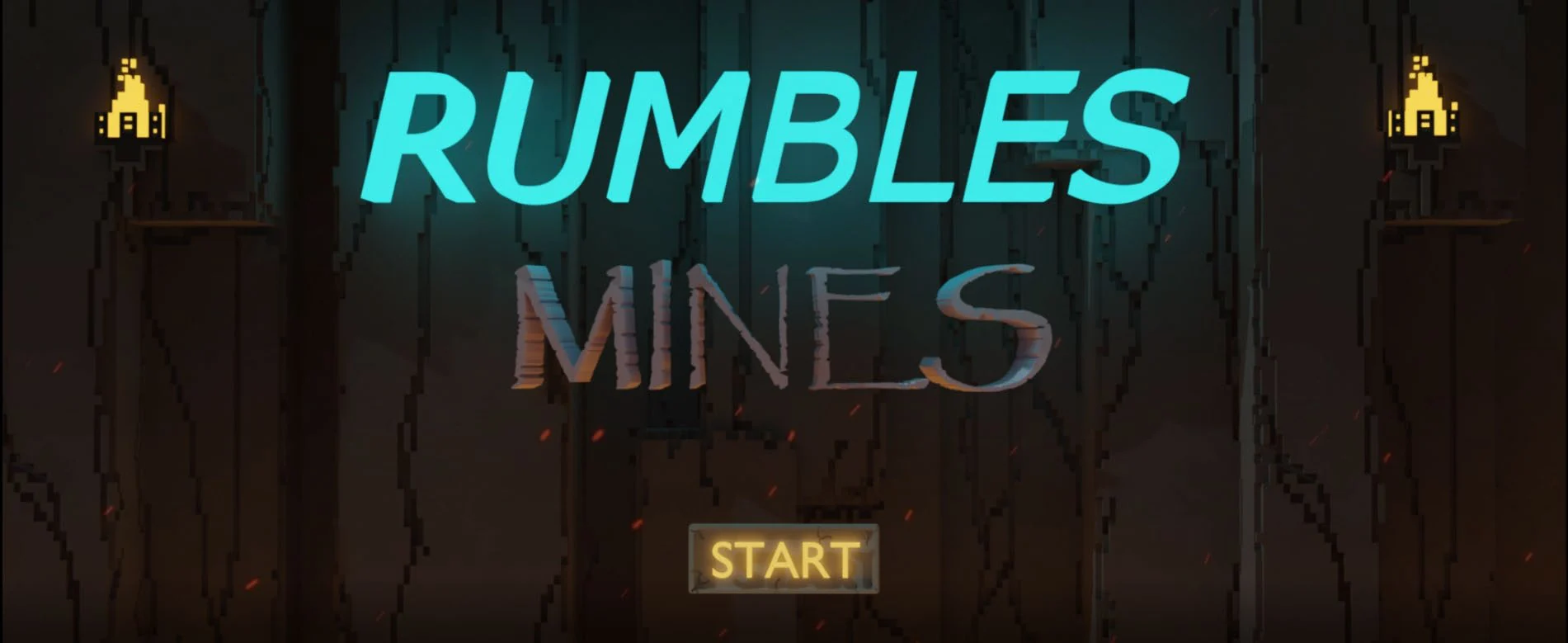
Mines Rumble — Landslide is a tactical brawler built around displacement.
Rather than defeating opponents by reducing a traditional health bar, players use character abilities, collisions and the environment to push enemy units off the battlefield.
The arena gradually collapses during the match, continuously creating new tactical opportunities and dangers.
My contribution
My role.
- Game Design
- Systems Design
I worked on game design and systems design, with an additional contribution to faction design and the relationship between faction identity and gameplay systems. I also created the game's lore and took part in balancing.
- Game design
- Systems design
- Narrative / Faction Design
- Lore creation
- Balancing
Project overview
The project.
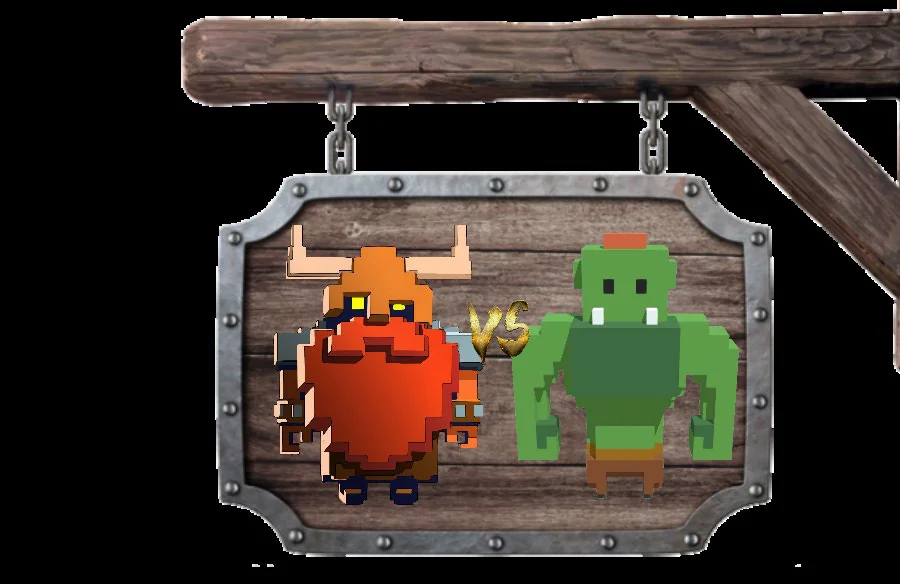
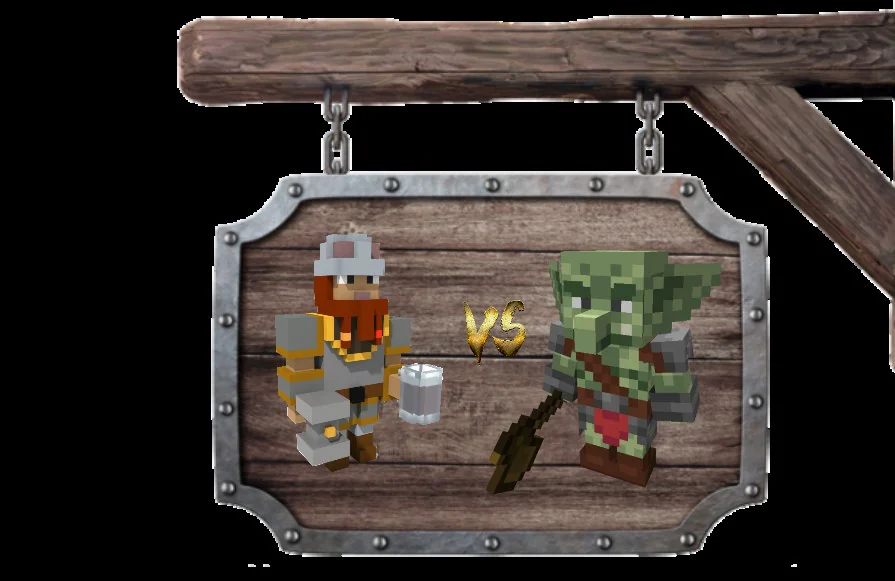
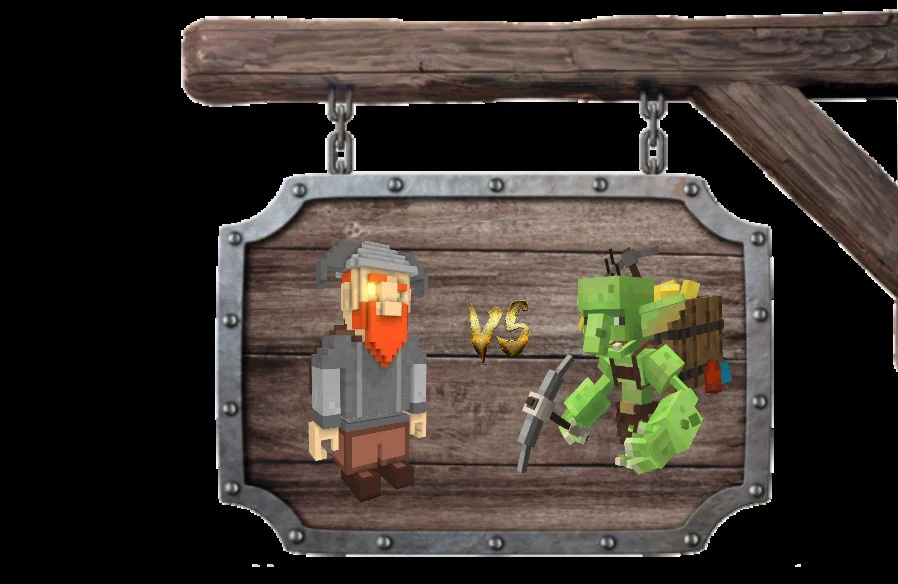
The game combines a fun heroic-fantasy tone with dwarves and goblins. Its tactical depth comes from displacement and environmental interactions rather than traditional damage.
Limited character action sets combine with a changing arena to create increasingly complex situations.
01 / Design breakdown
Design pillar: displacement.
Attacks are primarily tools for moving units. Positioning therefore matters more than raw damage: an attack changes where a unit stands and what can happen to it next.
02 / Design breakdown
Design pillar: ejection counters.
Characters accumulate ejection counters through attacks and collisions. The higher the counter, the farther that character is pushed, creating escalating risk throughout the match.
03 / Design breakdown
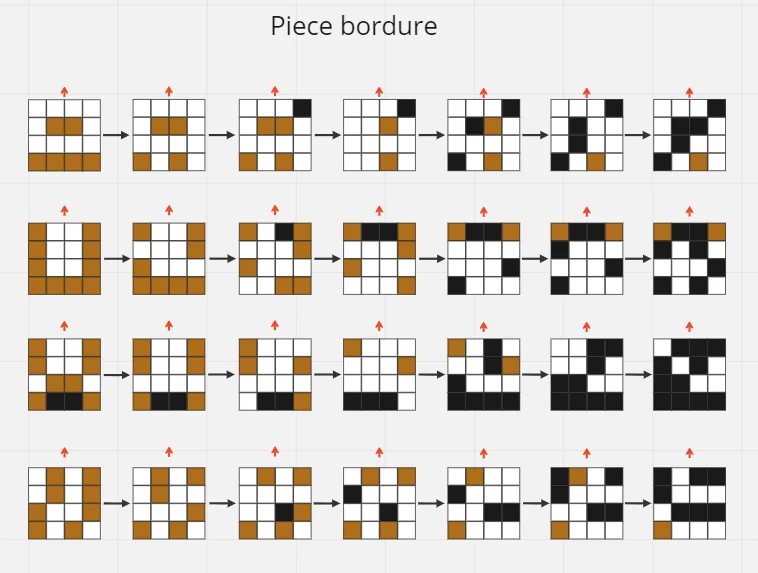
Design pillar: a degrading arena.
The battlefield progressively loses tiles. Falling debris destroys parts of the arena and creates lethal gaps.
Players receive a warning before destruction, allowing them to anticipate changes rather than suffer completely random punishment.
04 / Design breakdown
Simple characters, complex interactions.
Characters have intentionally limited action sets. Depth emerges from the relationships between those actions and the arena.
- Positioning
- Order of activation
- Collisions
- Environmental interactions
- Combinations between characters
05 / Design breakdown
Character design.
Three distinct characters give players different ways to manipulate the battlefield.
- Rock — a versatile character who can grab and throw characters and environmental objects
- Grenadier — a ranged specialist whose explosive attack affects a 3×3 area and pushes units
- Scout — a mobility-oriented character who places conveyor belts to redirect and eject units
06 / Design breakdown
Level design: a destructible grid.
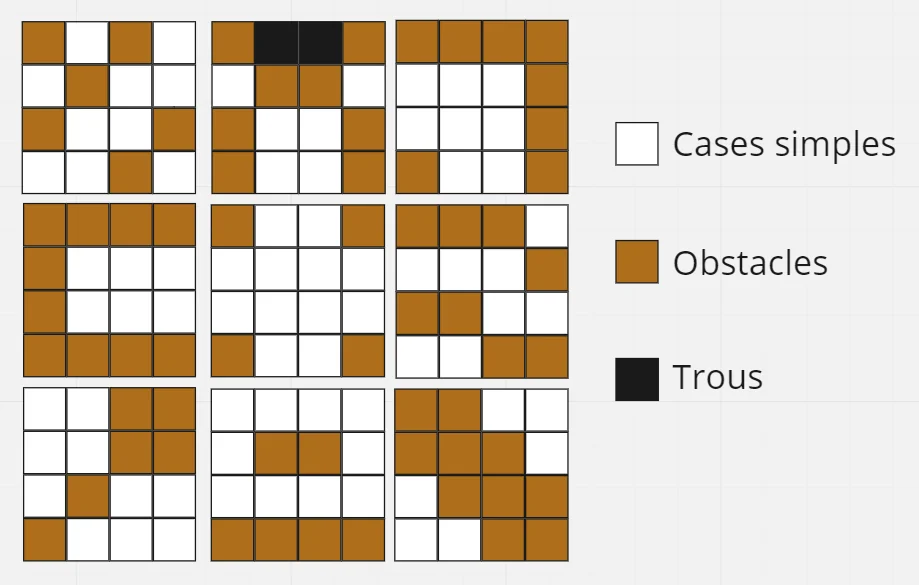
The battlefield uses a 12×12 grid divided into nine 4×4 sectors. It includes normal ground, obstacles, holes and destructible areas.
Degradation patterns are selected for the different sectors, providing procedural variation while letting experienced players recognise patterns and plan ahead.
Obstacles and terrain interactions discourage simple straight-line solutions and encourage combos.
07 / Design breakdown
Systemic interactions.
Characters, obstacles, conveyor belts, explosives and holes interact with one another. Collisions can:
- Add ejection counters
- Destroy obstacles
- Redirect characters
- Trigger chains of displacement
- Create new tactical opportunities
08 / Design breakdown
Late-match pressure.
A large bomb can appear later in the match. It follows the same displacement systems as characters and terrain, becoming another object players can manipulate strategically.
09 / Design breakdown
Faction identity & gameplay.
I also worked on faction design and on connecting faction identity with gameplay systems. This contribution links the world of dwarves and goblins to the way the game is played.
Collaboration
The team.
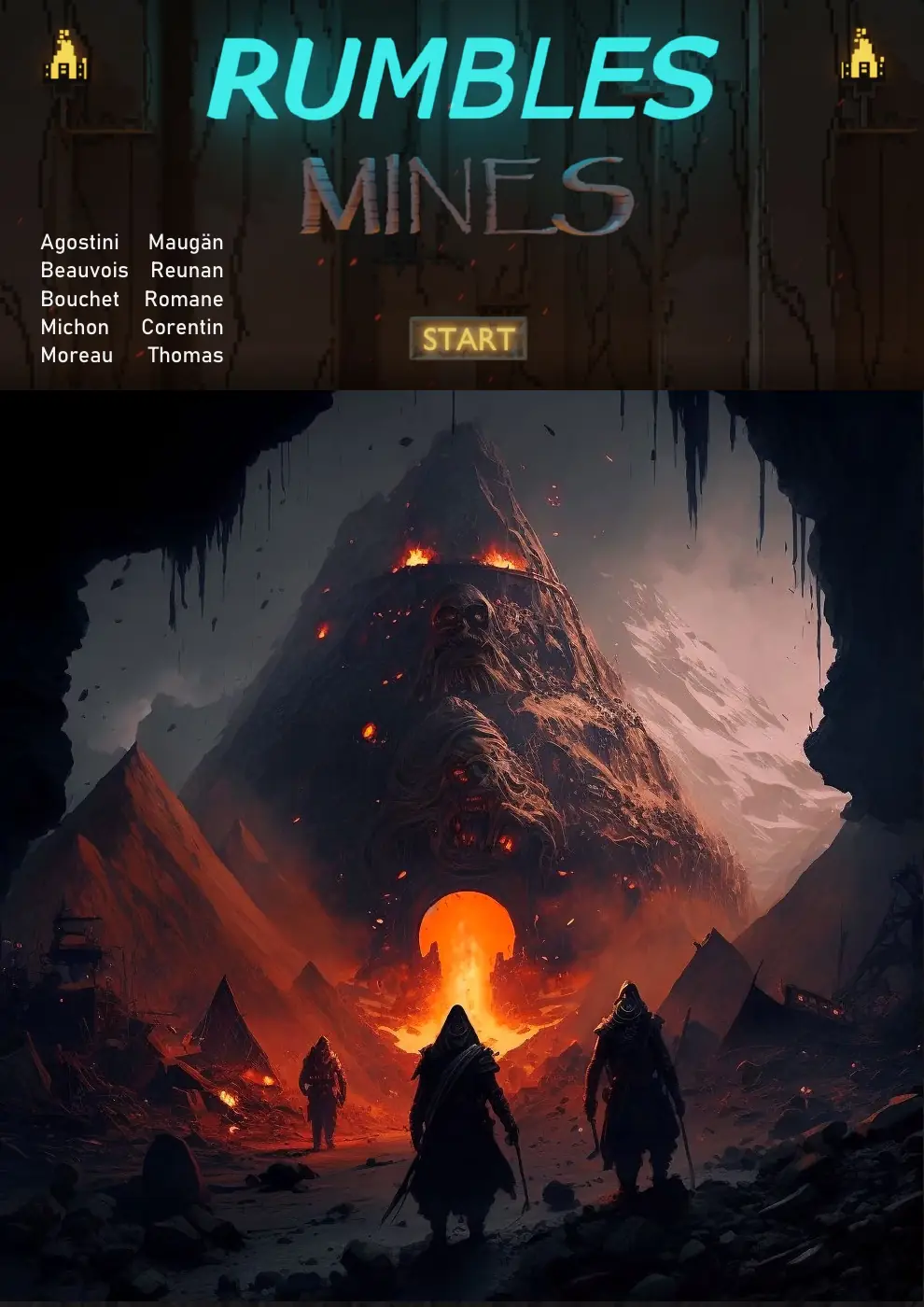
- Maugän AgostiniGame Design
- Reunan BeauvoisProgramming
- Romane Bouchet2D Art
- Corentin MichonGame Design · Lore · Balancing
- Thomas MoreauGame Design
Documents
Design documents.
Game Design Document
1 / 13Original document in French
Visual archive
Media.
Next project
Fast Forward