Case study 01 / 03 · Internal web application
IT request portal.
In production, pilot since November 2026
A portal that centralises the IT and operations requests of about 130 sites, the staff directory and the site records. It replaces scattered emails, phone calls and spreadsheets.
- Status
- Piloted with 6 sites since 4 November 2026
- Scope
- ≈ 130 sites, ≈ 400 people in the directory
- Stack
- Python, Django, PostgreSQL, React, TypeScript, Microsoft Graph, OVH
- Tests
- 282 server tests · 162 browser journeys
The problem
Requests from the sites came in by email, by phone or in spreadsheets, with no shared tracking. Nobody knew who was handling what, and volumes per site could not be measured.
What works
- IT and operations requests: assignment, priorities, public replies and internal notes, attachments, automatic closure
- Email notifications and reminders through Microsoft 365, and replying to a request directly by email
- Staff directory, with HR-only access to sensitive information
- Site records that the sites update themselves, statistics per site, dashboard
- Configuration without code: categories, deadlines, departments, roles and permissions
- Daily backups with a tested restore, uptime monitoring
Working in batches
The project moves forward in numbered batches. Each batch follows the same path:
- Written specification of the batch, based on feedback from the field
- Dedicated branch
- Full test suite green
- Validation report saved in the repository
- Merge only after my approval, then a version tag
- Diff review, backup, then deployment of the tag
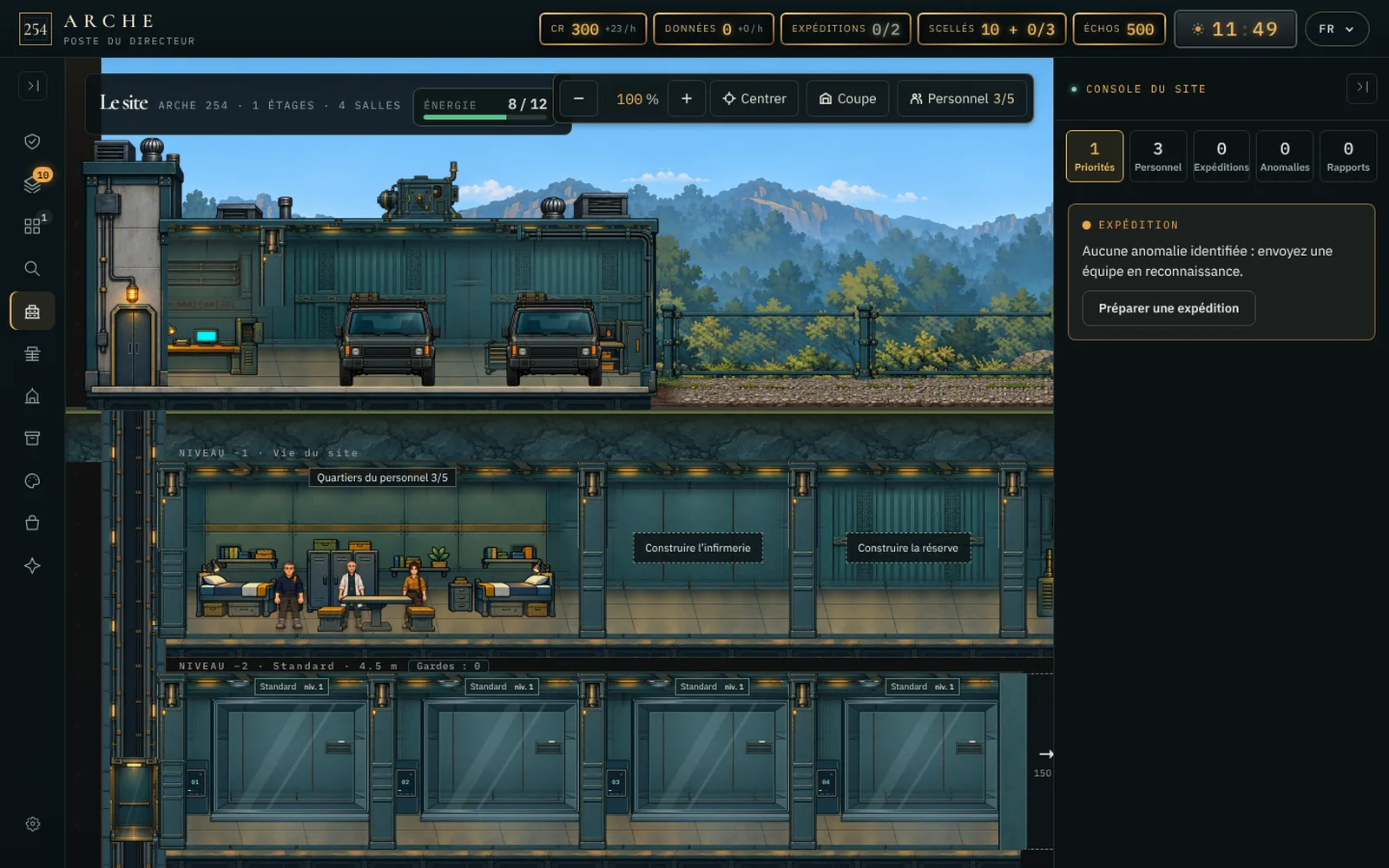
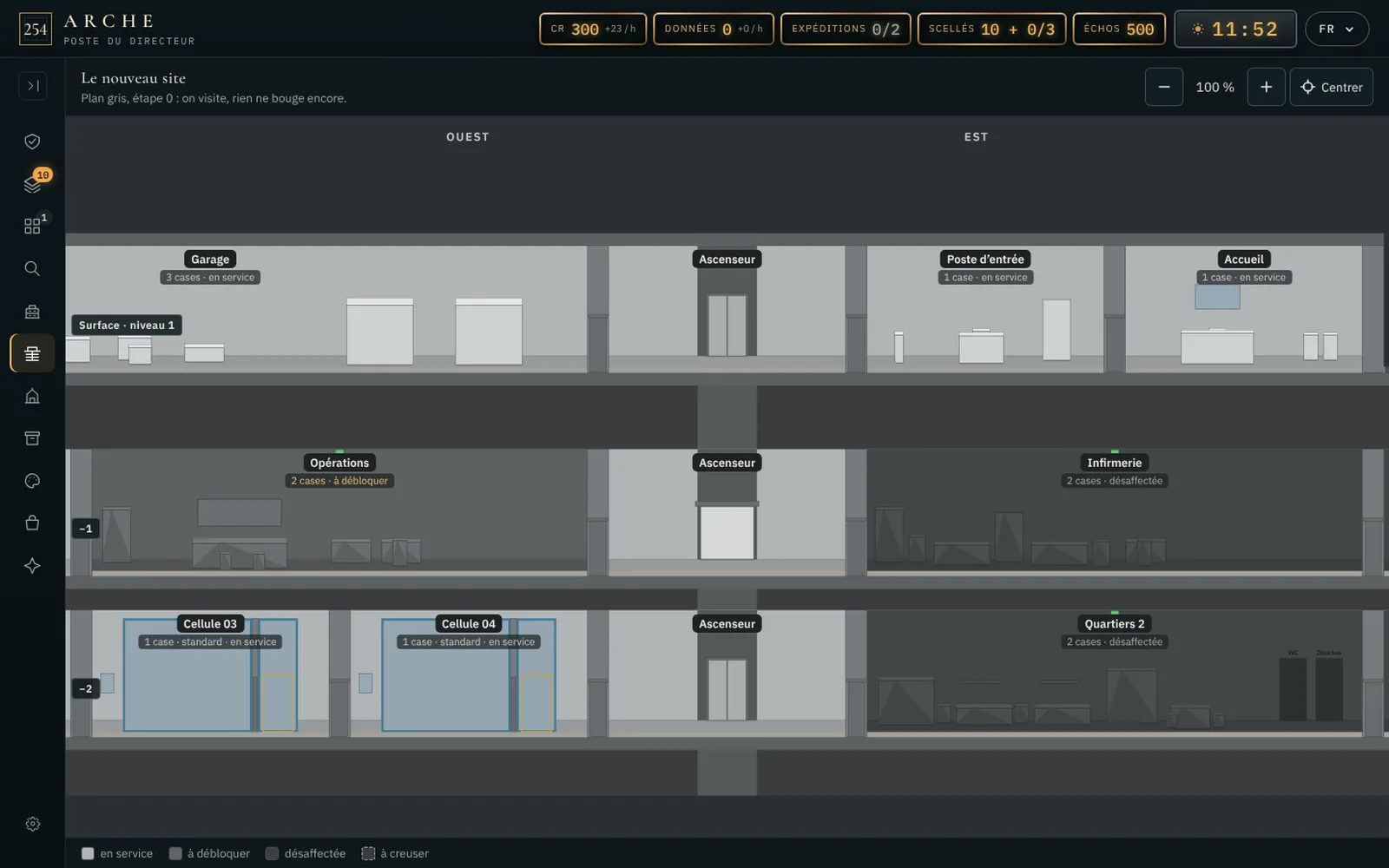
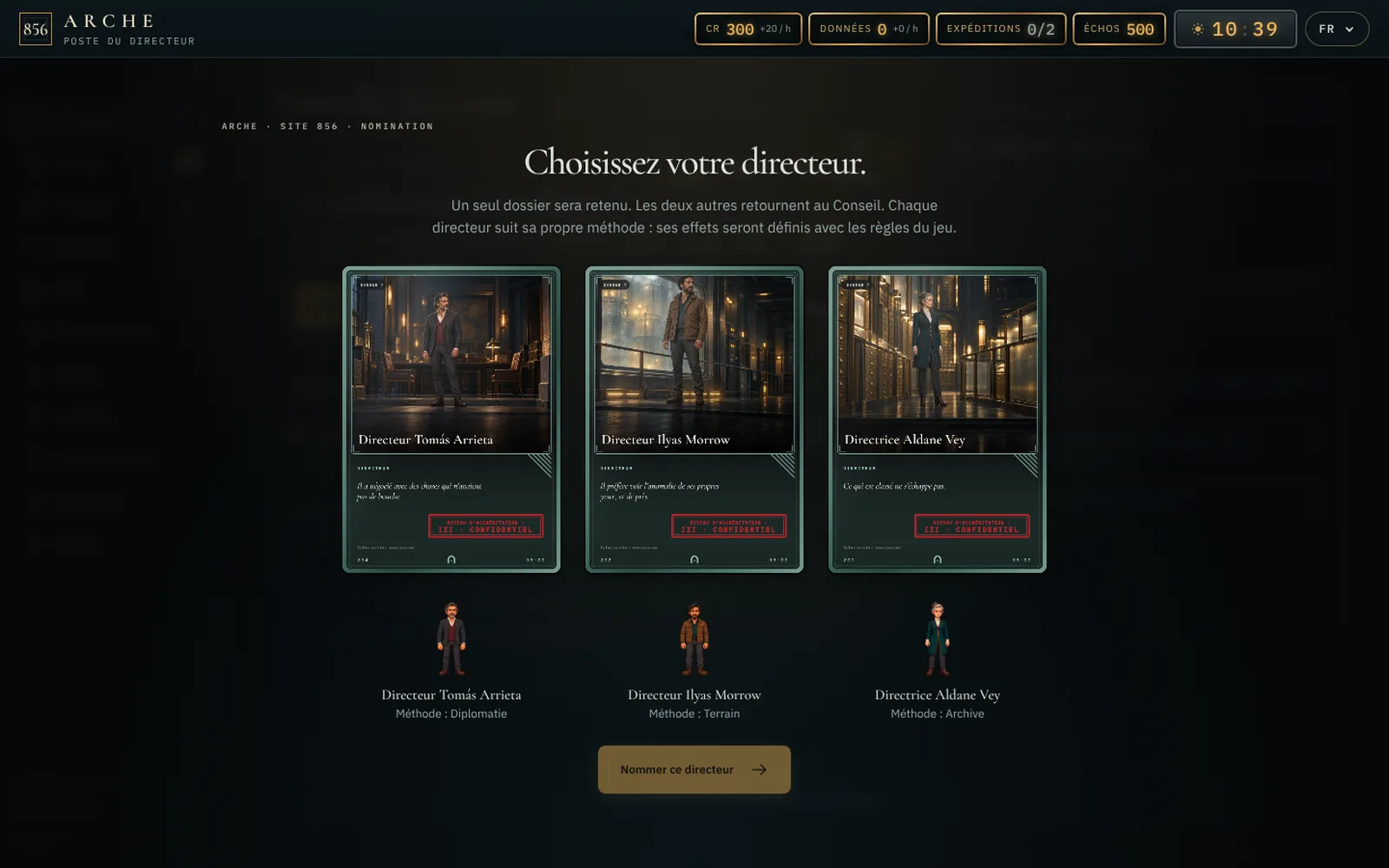
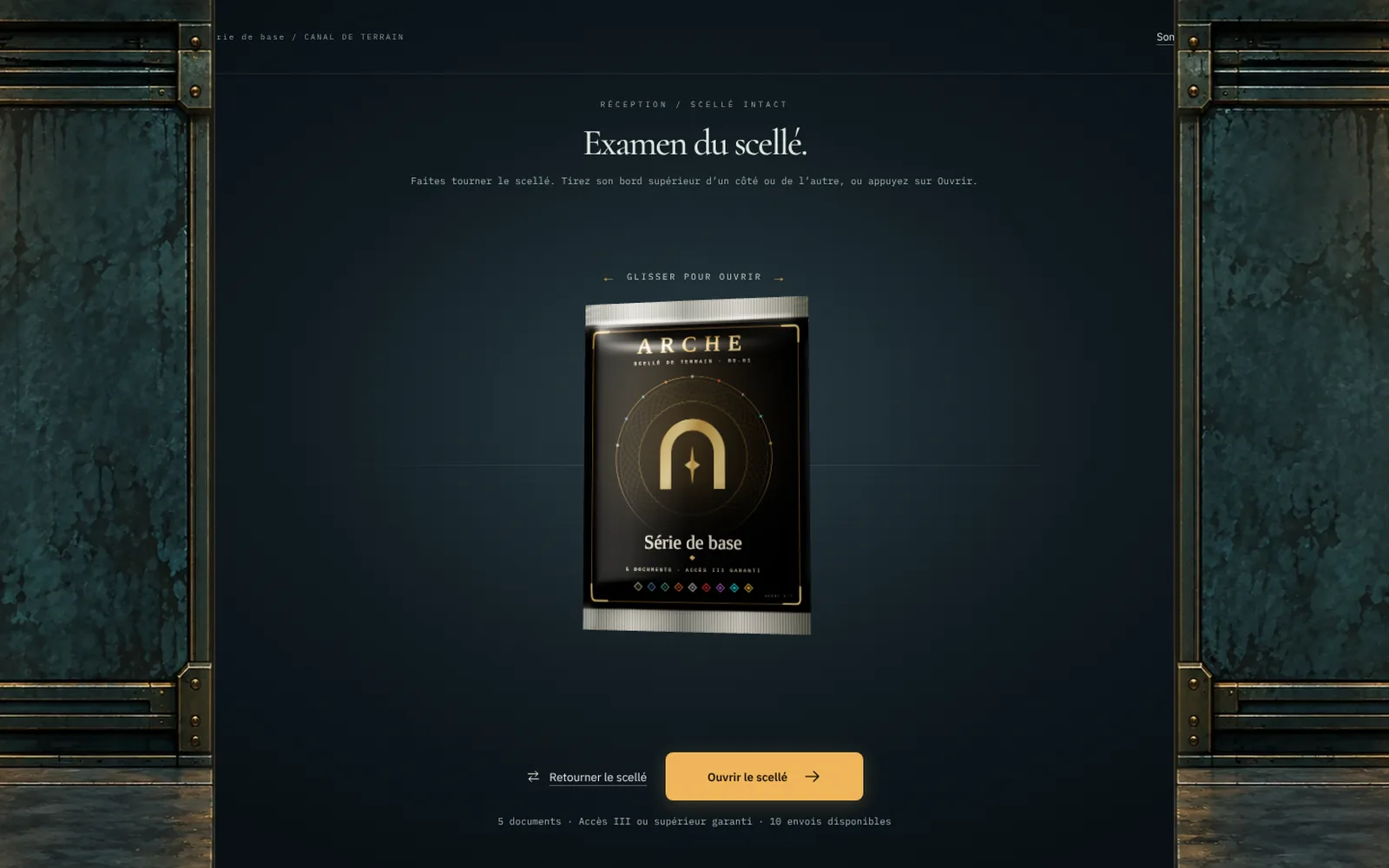
Screenshots
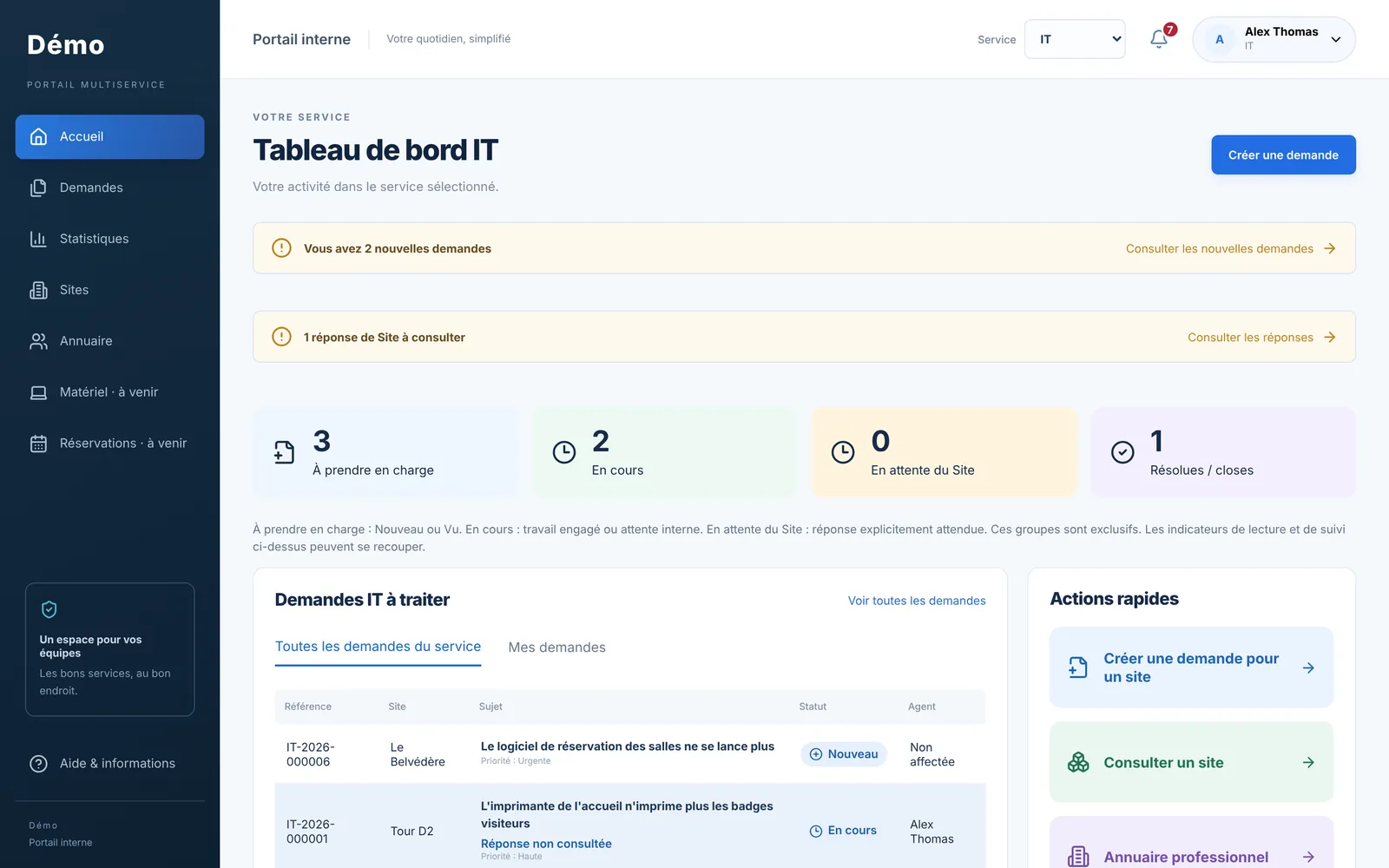
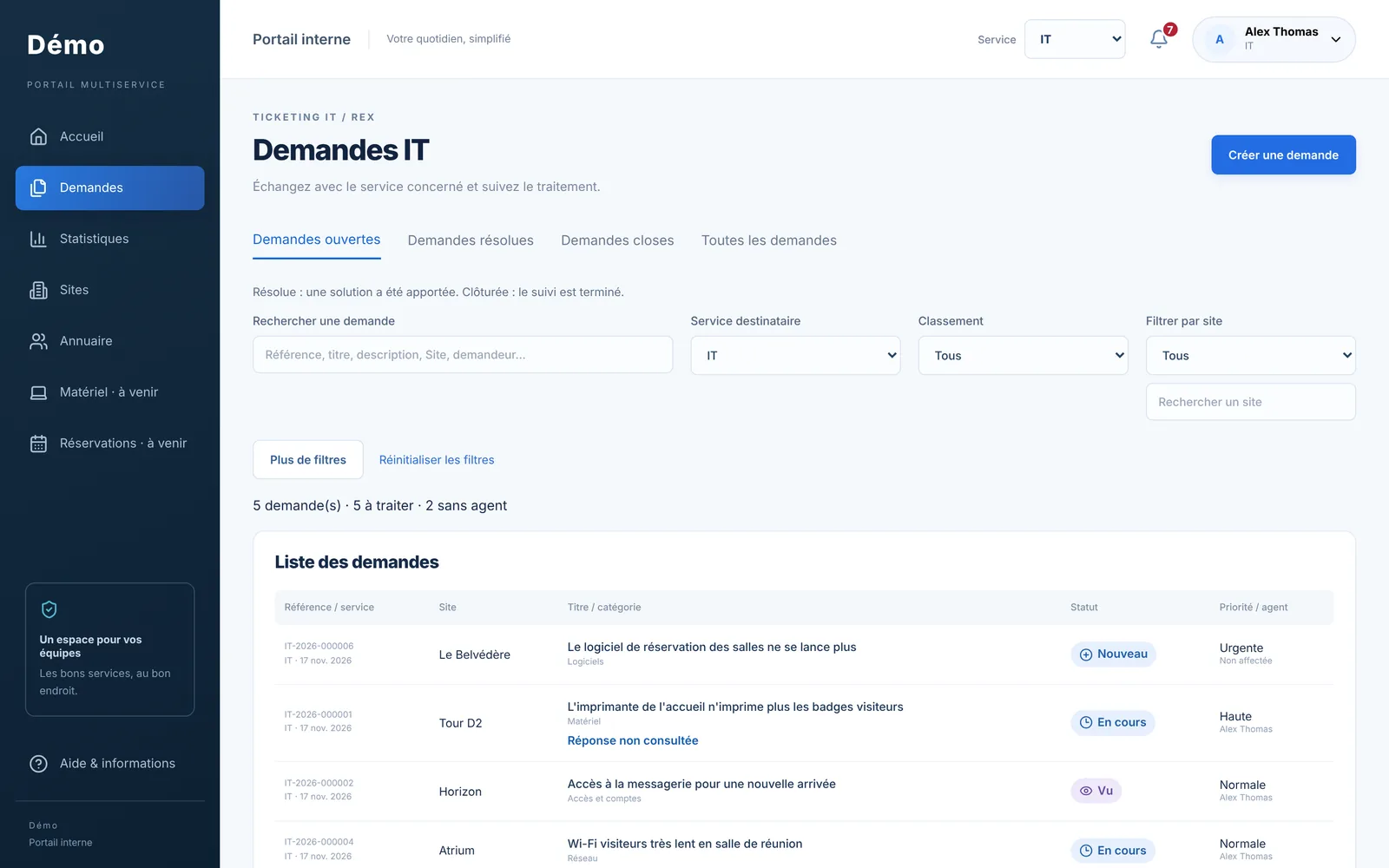
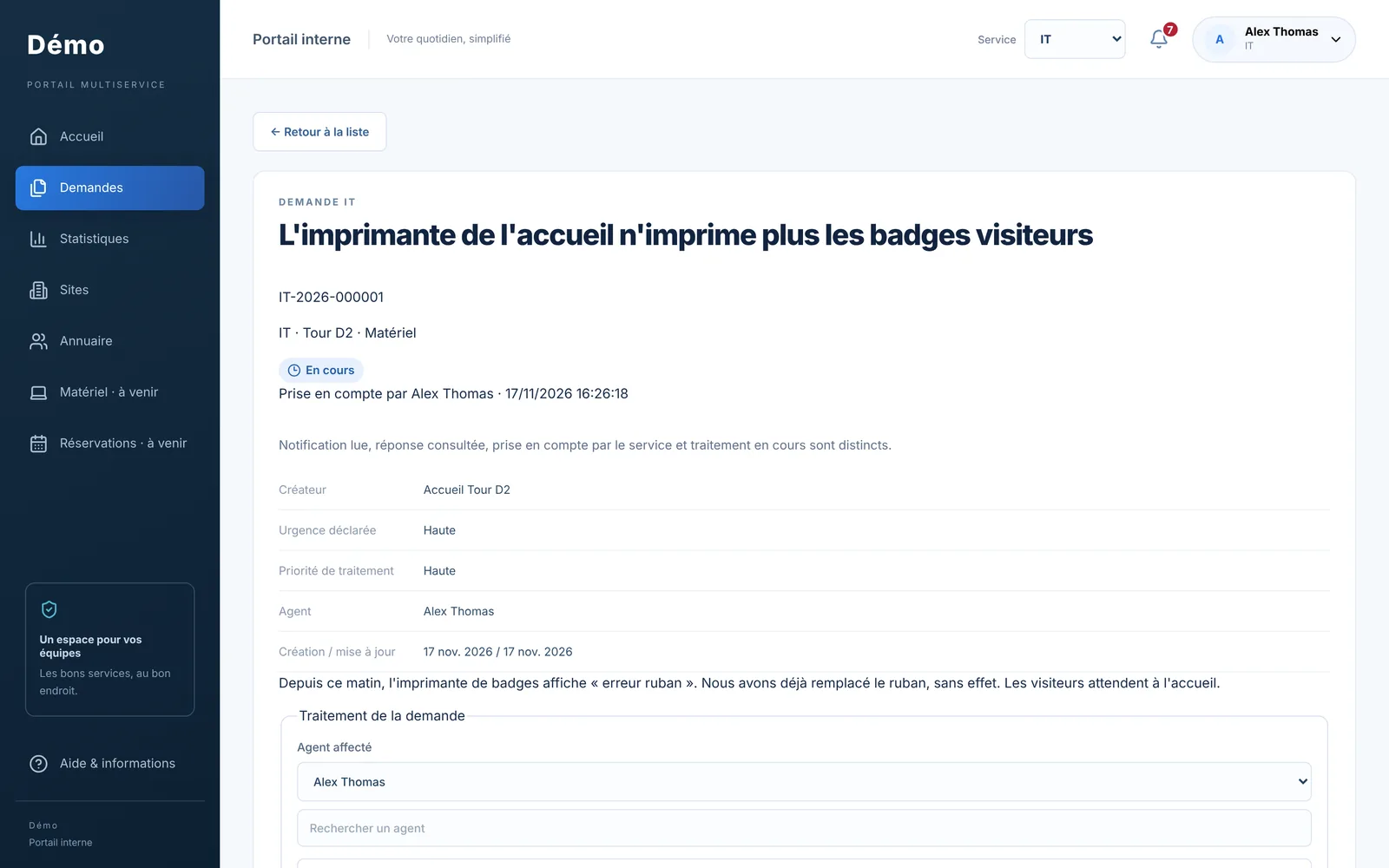
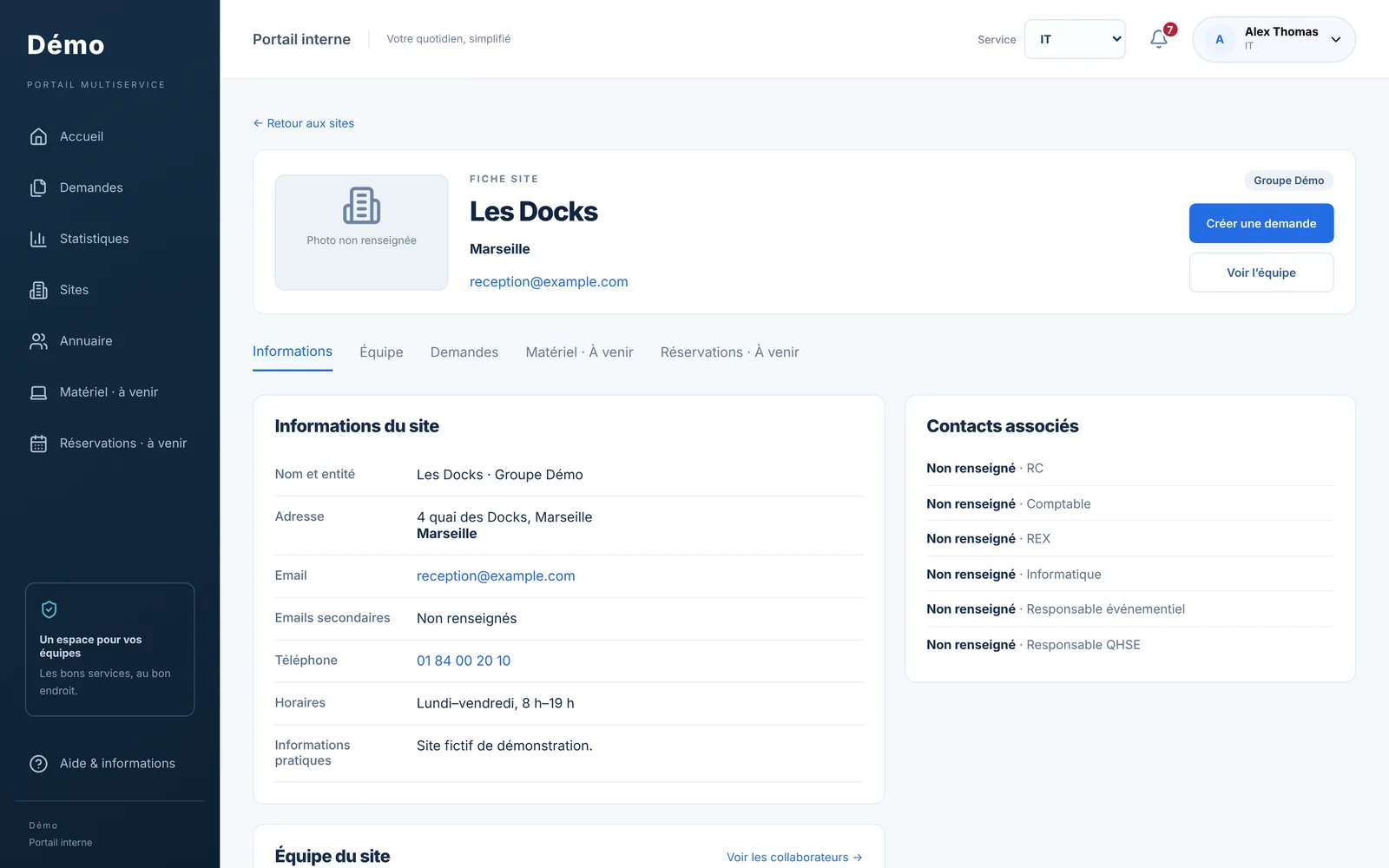
Screenshots taken on a demo copy, with made-up sites, people and requests. The company name has been removed.
Who did what
My role
- Gathering needs and making the calls: routing rules, roles and permissions, notification flows
- GDPR compliance, with the DPO
- Signing off each batch and manual testing
- All of production: deployments, data imports, Microsoft 365, DNS, OVH server
- Presenting to management and supporting users
The role of AI
- Claude writes the specification of each batch from my feedback, then reviews diffs and migrations before deployment
- Codex writes the code and tests